
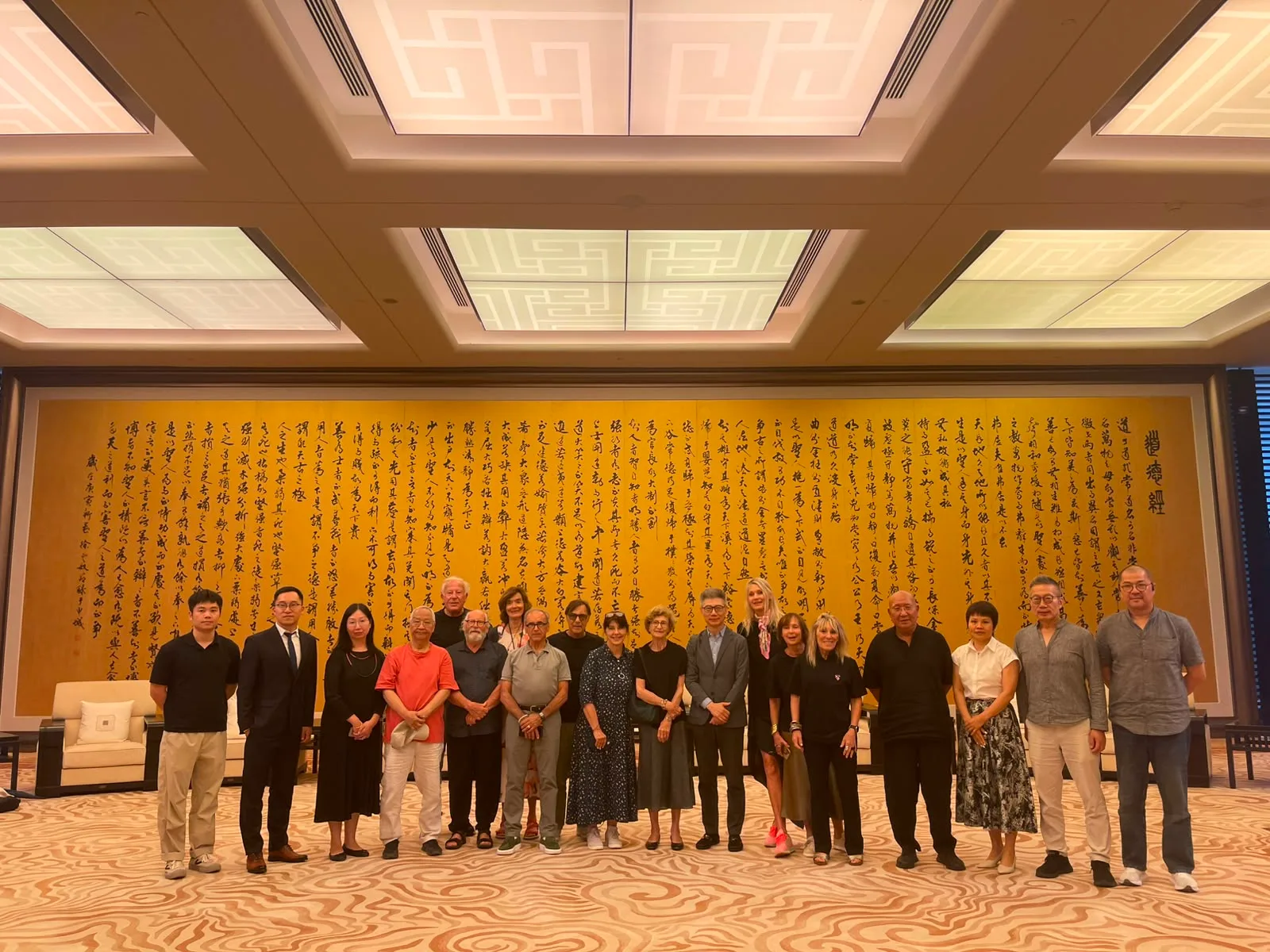
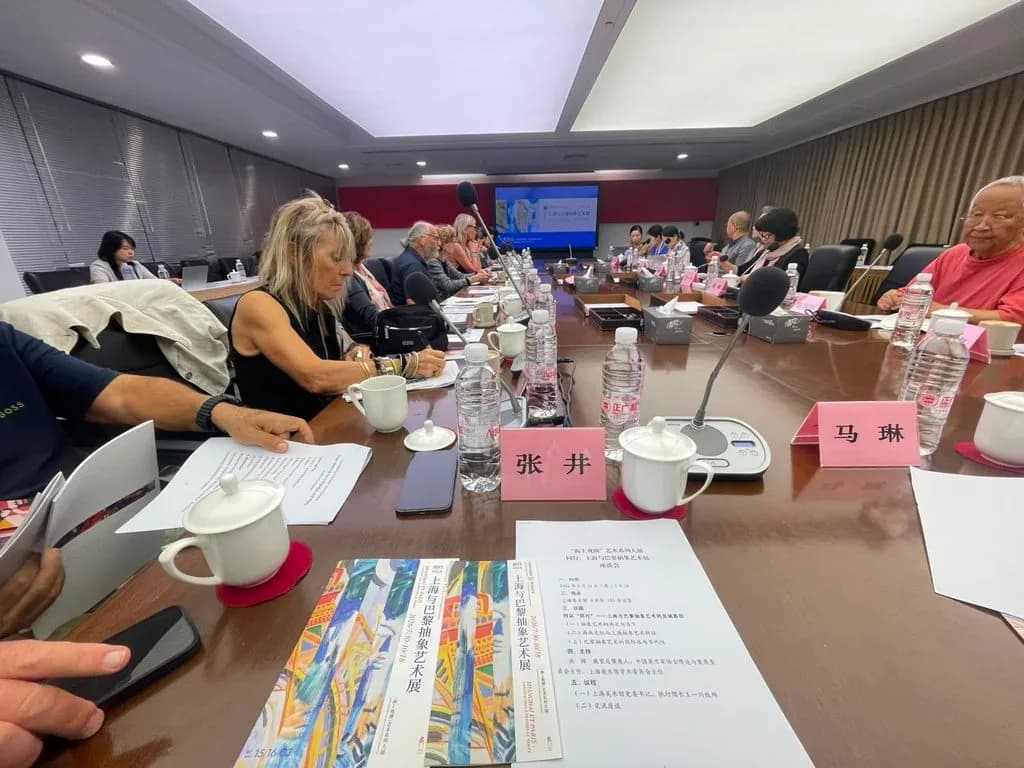
Shanghai, 11 August 2026 — In the spirit of the Global Youth Dialogue among Civilizations Alliance (GYDCA), an academic symposium held at the Shanghai Art Museum offered a compelling example of how art and cultural exchange can contribute to dialogue across borders, generations and civilizations.
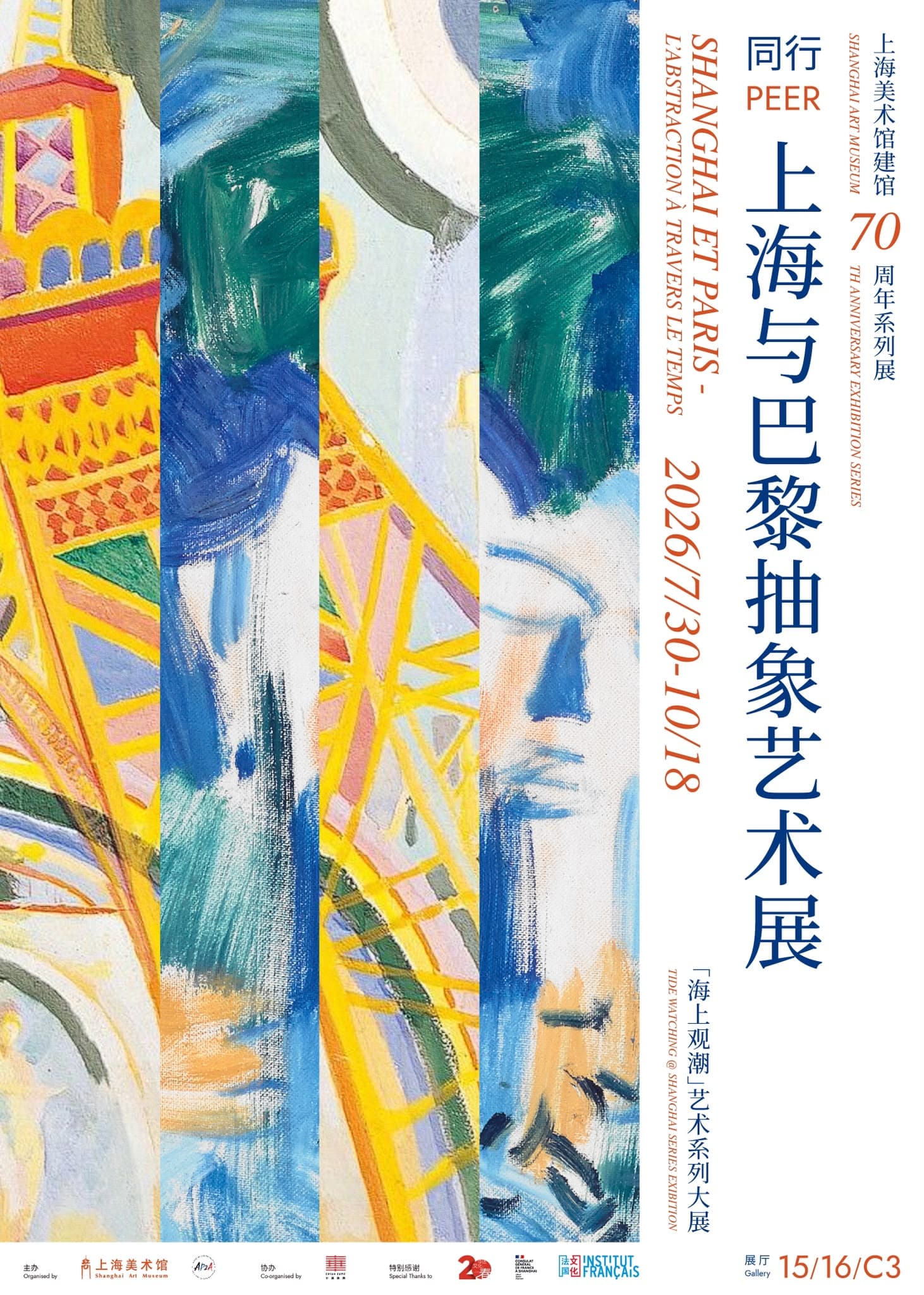
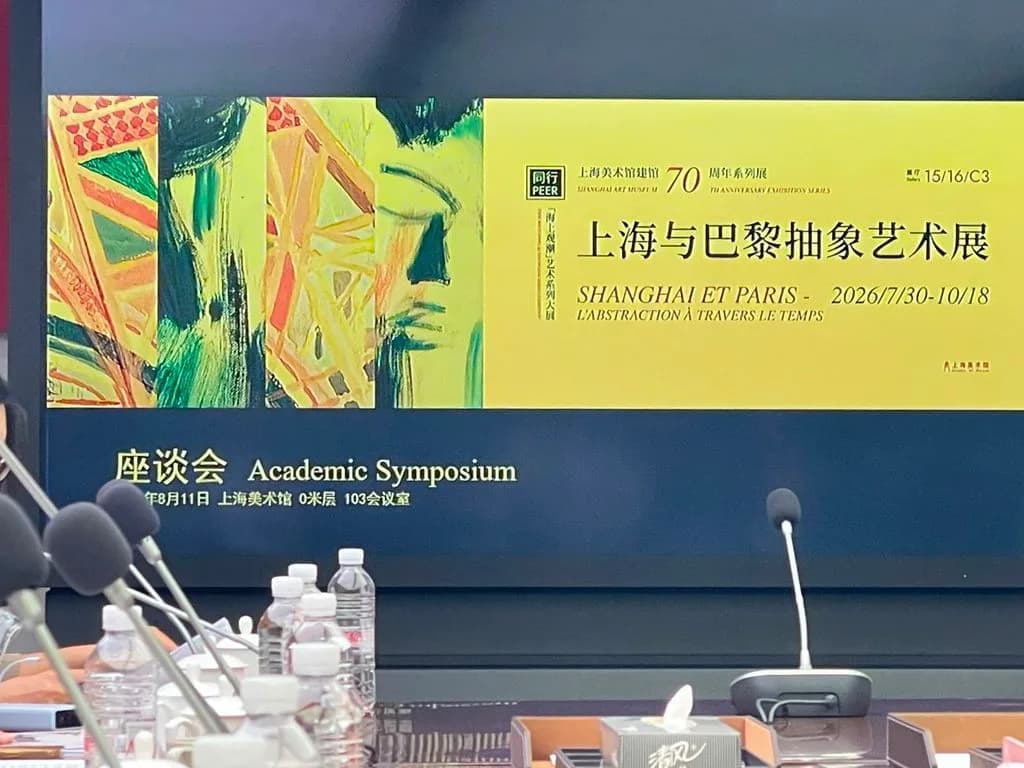
Organized in connection with the exhibition “Peer: Abstract Art in Shanghai and Paris,” part of the Shanghai Art Museum’s “Tide Watching @ Shanghai” series, the symposium brought together Chinese artists, curators and cultural professionals with a Francophone European delegation of artists and cultural figures. Although the exhibition establishes a dialogue primarily between Shanghai and Paris, the European participants reflected a broader cultural geography, with connections to France, Belgium, Italy, Switzerland and Spain, while sharing French as an important language of communication and artistic exchange.
The symposium, held on 11 August 2026 in Conference Room 103 of the Shanghai Art Museum, explored the theme “Why ‘In Step’? Dual-City Trajectories of Abstract Art in Shanghai and Paris.” Discussions addressed the history and contemporary development of abstract art, the relationship between Shanghai’s Haipai cultural tradition and its distinctive forms of abstraction, and the international and contemporary character of abstract art associated with Paris.
The meeting created a space in which different artistic histories could be considered not in isolation, but in relation to one another. Chinese and European participants exchanged perspectives on artistic practice, cultural heritage and the ways in which abstraction has developed within different social and historical environments. The dialogue demonstrated that artistic differences need not constitute barriers; they can instead become starting points for curiosity, exchange and mutual understanding.
This approach closely reflects the objectives of GYDCA, particularly its commitment to youth empowerment, cross-cultural contact, mutual understanding, intercultural dialogue and respect for cultural diversity. While the symposium itself brought together established artists, curators and cultural professionals, encounters of this kind have particular significance for younger generations. They demonstrate in practical terms how international cultural cooperation can move beyond abstract principles and become a lived experience of listening, questioning and learning from people whose cultural references may be different from one’s own.
From Shanghai and Paris to a Wider European Dialogue
One of the important dimensions of the encounter was its broader European character. The expression “Shanghai and Paris” provided the exhibition with its central artistic axis, yet the Francophone delegation represented a cultural space extending beyond the borders of France. Participants associated with several European countries contributed to an atmosphere in which language served not as a marker of a single national identity, but as a shared medium through which diverse European experiences could enter into conversation with China.
This distinction is particularly meaningful in the context of dialogue among civilizations. Civilizations and cultures rarely correspond neatly to national borders. Languages, artistic movements, personal trajectories and intellectual traditions continuously travel between societies. The symposium illustrated this interconnectedness: Shanghai and Paris functioned as two major cultural reference points while the people around the table brought with them experiences extending across China and Europe.
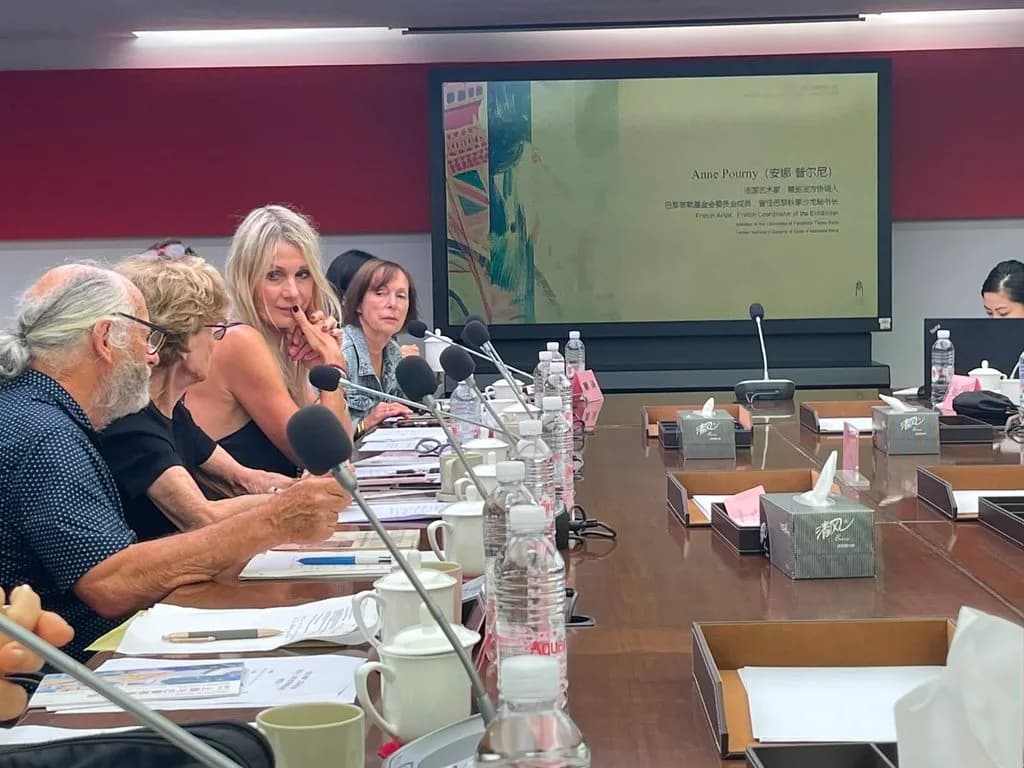
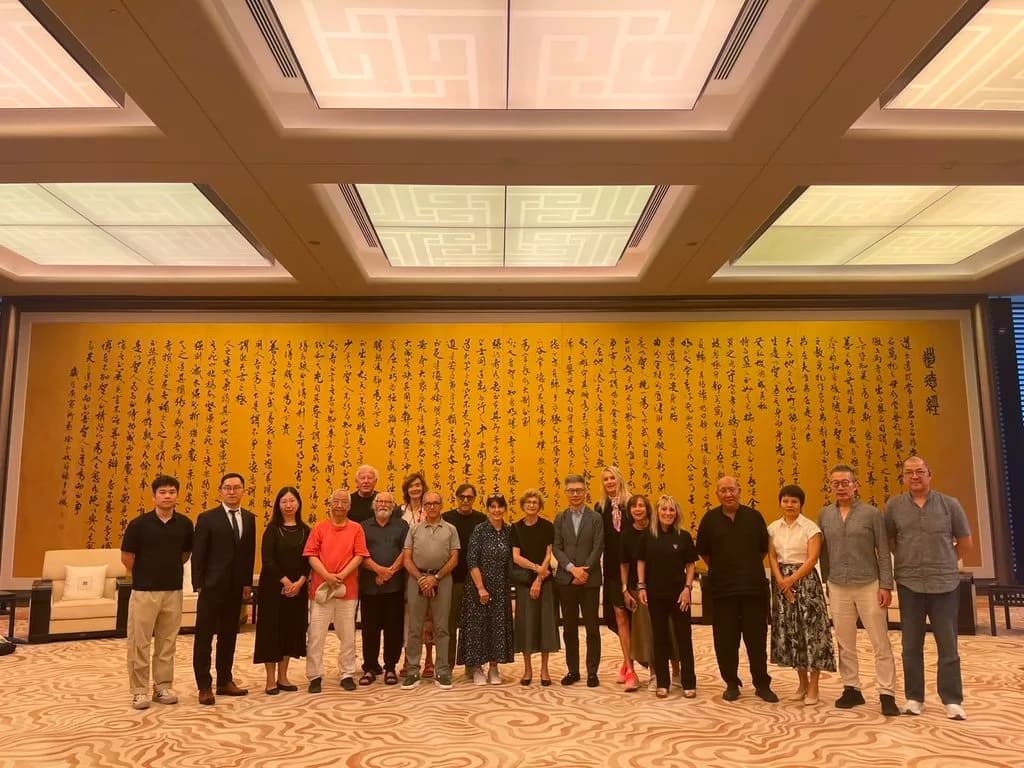
Among the European participants was Anne Pourny, French-side coordinator of the exhibition, a committee member of the Fondation Taylor in Paris and former Secretary-General of the Salon d’Automne de Paris. The European artistic delegation also included Daniel Lacomme, Jana “Jan K.” Koller, Anne Lehembre, Fabienne Lucchesi, Bernadette Morand, Antonio Nigro, Isabelle Palenc and Maurice Saubi.
Chinese participants included artists and cultural figures such as Zha Guojun, Huang Azhon, Zhang Jian-Jun, Weng Jijun, Feng Lianghong and Huang Yuanqing, alongside representatives, curators and academic staff of the Shanghai Art Museum.
Art as a Language of Mutual Understanding
Abstract art provided an especially interesting framework for this encounter. Unlike dialogue based solely on spoken or written language, visual art allows participants to communicate through form, colour, material, gesture and perception. A work may emerge from a specific cultural environment while remaining open to interpretation by someone formed within a very different one.
The discussions therefore raised a wider question relevant to intercultural dialogue: how can societies preserve their distinctive cultural identities while remaining open to influences, interpretations and relationships beyond their borders?
Shanghai itself offered an appropriate setting for this conversation. Its Haipai tradition has long been associated with encounters between local Chinese culture and international influences. Paris, meanwhile, has historically attracted artists and cultural movements from across Europe and the wider world. Bringing these two artistic trajectories into dialogue highlighted both their differences and their shared histories of openness, experimentation and cultural circulation.
The encounter also showed that mutual understanding does not require cultural uniformity. Meaningful dialogue depends precisely upon the existence of different experiences and perspectives. Cultural diversity becomes productive when participants have opportunities to meet as equals, explain their traditions, listen to alternative viewpoints and discover areas of common concern.
Creating Space for the Next Generation
For GYDCA, this dimension is especially relevant. Youth empowerment in intercultural relations requires more than encouraging young people to travel or learn about other countries from a distance. It requires creating environments in which they can participate meaningfully in cultural conversations and develop the confidence to become future artists, researchers, educators, cultural mediators and community leaders.
Meetings between experienced Chinese and European cultural figures can therefore have an impact beyond the participants immediately present. They provide models for the kinds of international networks that younger generations can inherit and expand.
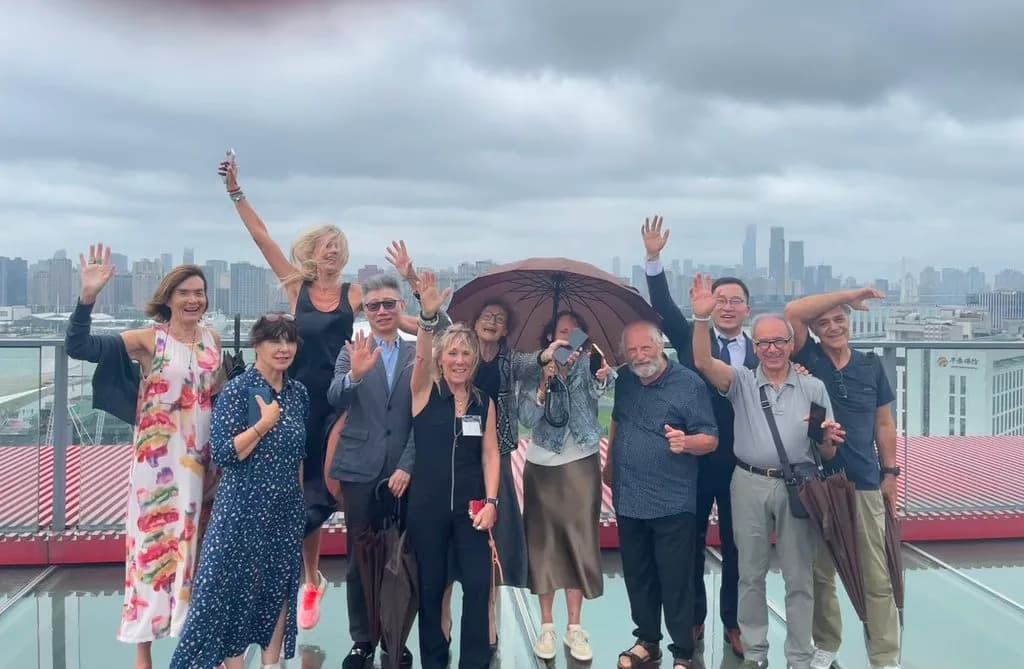
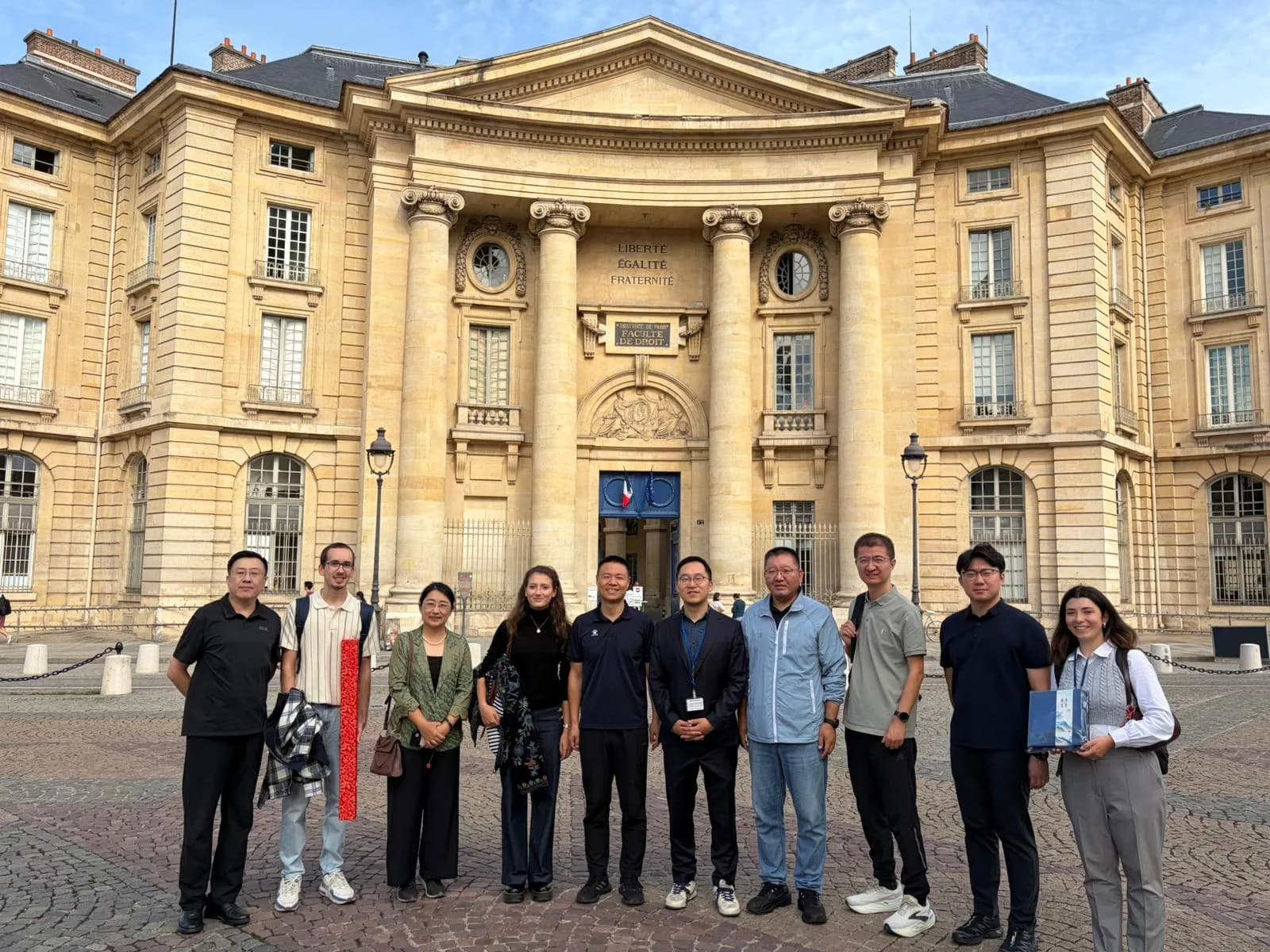
The informal moments surrounding the symposium were equally significant. Conversations across the conference table, exchanges between participants and the gathering of Chinese and European guests outside the formal meeting environment transformed institutional cooperation into direct human contact. Such moments remind us that dialogue among civilizations ultimately takes place between people.
The Shanghai symposium demonstrated how museums and cultural institutions can serve not only as places for displaying art, but also as platforms for international dialogue. Exhibitions can bring different artistic traditions into the same physical space; seminars can provide the intellectual framework for examining their similarities and differences; and personal encounters can build relationships that continue beyond a single event.
In this sense, “Peer: Abstract Art in Shanghai and Paris” offered more than a comparison between two artistic centres. It became an opportunity to consider how China and a wider Francophone Europe can meet through creativity, scholarship and conversation.
For the Global Youth Dialogue among Civilizations Alliance, such encounters embody an important principle: intercultural understanding is strengthened through participation. By creating more opportunities for young people to engage with artists, institutions and peers from different cultural backgrounds, cultural exchange can help a new generation develop the openness, knowledge and relationships necessary to navigate an increasingly interconnected world.
Art cannot erase differences between civilizations—and it should not seek to. Its particular strength lies in allowing those differences to be encountered, explored and appreciated. In Shanghai, the dialogue between Chinese and European artistic perspectives showed how cultural diversity, approached with curiosity and respect, can become a foundation for connection rather than division.